Overview
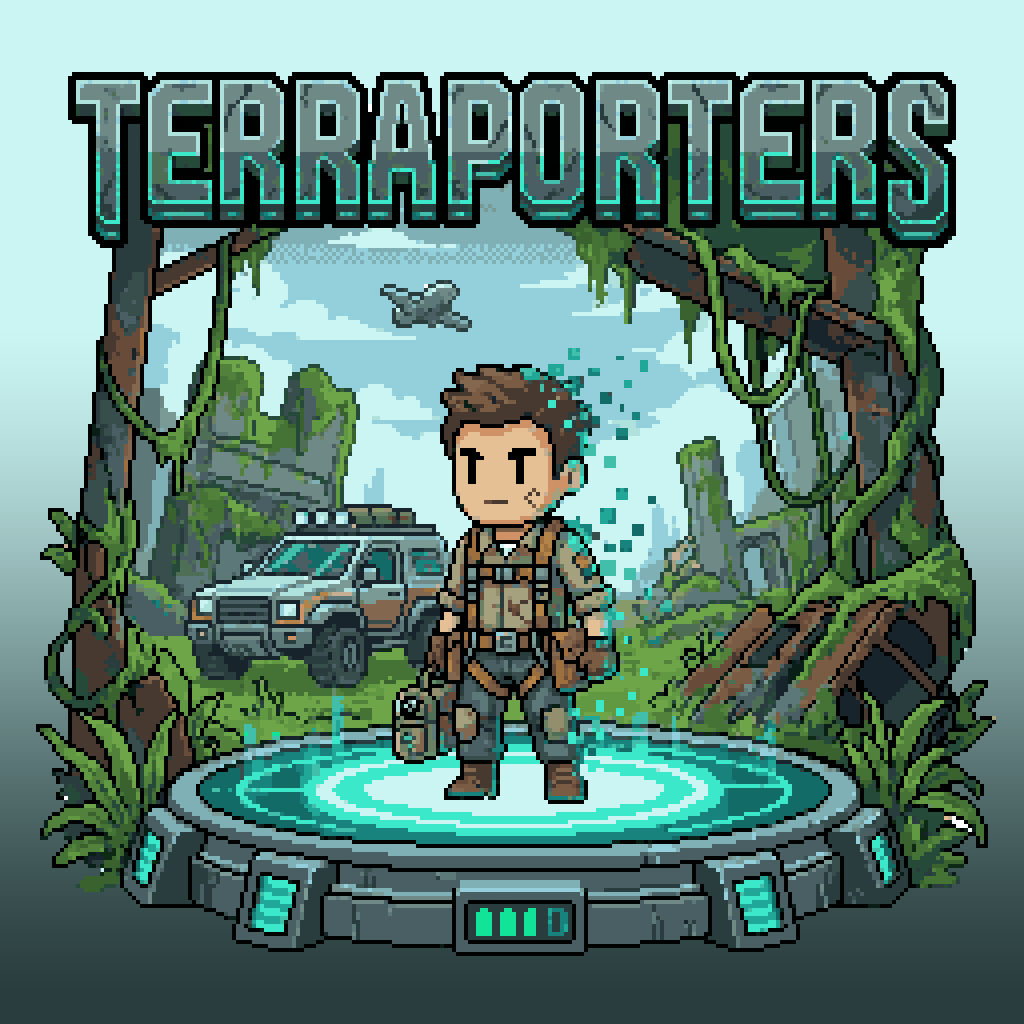
TERRAPORTERS is a third-person/top-down cooperative frontier logistics game where players are professional couriers, builders, and fighters keeping post-apocalyptic civilization connected. Blend of trucker, park ranger, survivor, soldier, and engineer energy. The core loop: deploy into a zone → deliver cargo → build infrastructure → stabilize the region → move on.
Tone: "CAN DO but IN NEED" — Humanity is close to extinction and the stakes are real, but the Terraporters are the ones punching back with competence, not despair. They're builders, fighters, and deliverymen — a trifecta of frontier professionals. Adventurous, professional, hopeful with real teeth.
Player Count: 2-64 players per zone (scalable operations).
Zone-Based Operations
How It Works
Terraporters don't patrol a permanent map. They are called into zones to stabilize them.
The Zone Loop
- A zone is identified as unstable (supply lines cut, threats increasing, infrastructure collapsed)
- The Carrier flies in and deploys as a forward operating base
- Terraporters work the zone — deliveries, threat clearing, infrastructure building
- Zone stabilizes — supply lines restored, roads repaired, bridges built, generators powering defenses
- Team packs up and moves to the next zone
Stabilization = Three Pillars
- Deliveries: Moving cargo between silos and outposts within the zone
- Threat Clearing: Eliminating hostile wildlife and Selenite security camps blocking routes
- Infrastructure Building: Constructing roads, bridges, and generators with emergent gameplay effects
Zone Scaling
- Zones scale from small (2-4 player) operations to massive (32-64 player) campaigns
- Larger zones have more objectives, tougher threats, and more infrastructure to build
The Carrier: Mobile HQ
What It Is
A massive retro-futuristic cargo carrier aircraft — think Thunderbird 2 meets a C-130 Hercules. This is the team's forward operating base.
Function
- Flies into a zone, lands, becomes the team's FOB
- Brings fabricators that repurpose local resources into infrastructure equipment
- Vehicle bay — stores and deploys buggies, trucks, and heavy equipment
- Mission coordination — contract board, zone status, team logistics
- The Carrier is a workplace, not a home — it's where you clock in
The Fabrication Loop
- Gather local resources from the zone (moon fragments, salvage, raw materials)
- Feed resources into the Carrier's fabricators
- Fabricate infrastructure equipment: bridge materials, road repair gear, generator components
- Deploy fabricated equipment to build zone infrastructure
Infrastructure Building
What You Build
- Roads: Repair and construct surface roads. Emergent effect: faster vehicle travel, safer routes
- Bridges: Span gaps, rivers, and flood zones. Emergent effect: open shortcuts, bypass hazards
- Generators: Power defensive installations and zone systems. Emergent effect: automated defenses, lighting, comms
How It Feels
Infrastructure building is satisfying zone progression — you can SEE the zone getting better. Roads you built make your next delivery faster. Bridges you constructed let teammates bypass a dangerous canyon. Generators you powered up keep the wildlife at bay.
Emergent Effects
- Infrastructure benefits ALL players in the zone
- Building is cooperative by nature — one player's bridge is every player's shortcut
- Infrastructure persists within a zone campaign (resets between zones)
The Cataclysmic Event: The Moonbreak
What Happened
~100 years ago, Earth's moon shattered. The cause remains unknown (Selenite Corp is rumored to be connected).
Current State
- Moon fragments continuously fall to Earth's surface
- Unpredictable tidal flooding makes surface travel dangerous
- Fragments have otherworldly properties — valuable as fabrication resources and for research
- Fragments attract hostile mutated wildlife
Human Adaptation
- Humanity retreated into underground silos
- Surface is considered "hostile territory" — an open frontier wasteland
- Only Terraporters with heavy-duty vehicles and mobile infrastructure traverse topside
The Silos: Underground Civilization
Structure
- Each silo specializes in specific production (manufacturing, agriculture, medicine, etc.)
- No silo is self-sufficient — they depend on trade with other silos
- Surface roads are unreliable due to floods, terrain shifts, and wildlife
- Traditional transport (rail, air) is too vulnerable
Why Terraporters Exist
Distribution networks have collapsed. Terraporters with heavy vehicles are the ONLY reliable way to move cargo between silos. Without them, civilization fragments. Silos are communities the Terraporters connect — survivors live there, and Terraporters can stay as guests between deployments.
The Companies
TERRACORP (Neutral-Good)
Terraporters work for Terracorp — the sole employer and primary fabricator supplier.
- Primary logistics company keeping civilization connected
- Contracts cover deliveries, infrastructure building, and threat clearing
- Standard work: food, medicine, supplies, zone stabilization
- Reliable pay, professional support
- Supplies all fabrication materials for the Carrier's infrastructure equipment
Terracorp Philosophy: Keeping silos connected, building infrastructure, stabilizing zones. They're the good guys — the ones holding civilization together.
SELENITE CORP (Evil)
Selenite Corp is NOT an employer. They are the antagonist.
- Technocratic AI-focused company
- Profits and resources first, humans second
- Rumored connection to the Moonbreak cataclysm
- Operates automated security forces protecting resource extraction sites
- Oppressive, greedy, dangerous
Selenite's Role: Pure threat. Their security robots guard valuable resource deposits and moon fragment sites, blocking Terraporters from gathering materials. Clearing Selenite camps is part of zone stabilization work.
The Terraporters
Who They Are
Professional contractors who keep civilization alive through surface deliveries AND infrastructure building. Builders, fighters, and deliverymen. Honorable occupation with good rewards.
Culture
- "CAN DO but IN NEED" — competent professionals, not desperate survivors
- COOPERATIVE by default (not isolated lone wolves)
- Lone wolf playstyle possible but not the norm
- Strong frontier professional culture — the satisfaction of building, fixing, and delivering things that matter
- Players can see each other's destinations and band together organically
The Work
- Deploy from the Carrier into the zone
- Take contracts from the mission board (deliveries, threat clearing, infrastructure projects)
- Use company-provided vehicles (equipment rental — costs money upfront)
- Gather resources for fabrication between missions
- Primary currency: Money
The Missions: Zone Operations
Core Structure
Missions operate within the zone stabilization framework:
- Accept contract at the Carrier's mission board (costs money — equipment rental)
- Deploy from Carrier into the zone
- Travel to objective WITH your vehicle
- Complete objective: deliver cargo, clear threats, build infrastructure, gather resources
- Return to Carrier or continue to next objective
- Bank progress and rewards
- Zone stability increases
Mission Types
- Delivery: Move cargo between silos/outposts within the zone
- Threat Clearing: Eliminate hostile wildlife nests or Selenite security camps
- Infrastructure: Build or repair roads, bridges, generators
- Resource Gathering: Collect materials for the Carrier's fabricators
Contract Visibility
- All active Terraporters' objectives visible by their player name
- Encourages organic cooperation ("Hey, we're both heading to Silo-7!")
- Dynamic grouping based on shared routes and objectives
Cooperative Mechanics
- More players together = more aggressive wildlife (forcing cooperation)
- Infrastructure building benefits all players in the zone
The Threats
Mutated Wildlife
Post-Moonbreak mutations. Earth's ecosystems were altered by moon fragment radiation/otherworldly influence.
- Giant insects
- Fungal humanoids ("mushroom men")
- Other mutated Earth life
- Territorial, aggressive, attracted to moon fragments
- Detailed AI/tactics: TBD
Selenite Security Robots
Automated security forces deployed by Selenite Corp to protect resource extraction sites.
- Humanoid design using chibi proportions (same sprite system as players)
- Clearly metallic/robotic — the "anti-Terraporters"
- Some units actively guard valuable sites; others are abandoned/rogue units in wilderness
- Camp resource spots and moon fragment sites, blocking Terraporters from gathering materials
- Organized, tactical combat — professional-level threat
- Clearing Selenite camps is a zone stabilization objective that opens access to resources
- Cold, industrial aesthetic — stark whites, teal LEDs, clinical panels
- Detailed designs: TBD (unit types, loadouts, tactics)
Environmental Threats
- Unpredictable flooding (tidal cycles)
- Terrain hazards
- Further details: TBD
The Convoy
When multiple Terraporters share a route, they form convoys — professional formations of buggies and trucks moving together through hostile territory. The frontier is vast and dangerous, with colossal mutated vegetation and wildlife threatening every route, but coordinated teams handle it with skill and experience.
Death & Failure
Contract Failure
- Death = contract failure
- Money penalty (lose equipment rental fee + mission payout)
- Respawn at Carrier medbay or silo hospital after brief recovery sequence
Tone
Death is a professional setback, not a grim ending. "Dust yourself off, get back out there." This is a dangerous job with real consequences, treated matter-of-factly by professionals who know the risks.
Rescue Mechanics
- Distress calls — other Terraporters can resurrect/recover you
- Rescue rewards/incentives
Safe Space (Your Base)
Function
Personal space free from other players and work. Essentially the main menu with atmospheric background.
Location Options
- Custom underground terraporter base accessed via a surface hatch — personal, cozy, functional
- Silo guest quarters — staying in the communities you serve
- NOT the Carrier — the Carrier is a workplace, not a home
What Happens Here
- Cosmetics / character customization
- Offline activities
- Personal progression tracking
- Equipment and gear review
What Doesn't Happen Here
- No contract board (contracts taken at the Carrier)
- No other players
- No work-related activities
Camera & Perspective
Third-Person & Top-Down:
- Character-centric perspective (NOT over-the-shoulder)
- Combat uses top-down or elevated third-person view
- Maintains clear visibility during vehicle gameplay and combat
Design Philosophy
"Bright With Teeth"
The world is harsh and the stakes are real, but the humans within it are beacons of competence, color, and capability. This is an adventure, not a funeral march. Professional, hopeful, dangerous — never grimdark, never desperate.
Build Gradually
This document captures the FOUNDATION. Systems will be added incrementally as the game develops.
Cooperative, Not Isolated
Players should feel like professionals working parallel routes, naturally helping each other — not desperate survivors competing for scraps.
Builder Energy
The satisfaction of constructing infrastructure that helps everyone — roads, bridges, generators that make the zone better for all players.
Trucker Energy
The satisfaction comes from completing the run, getting paid, upgrading your loadout, and tackling harder routes.
Ranger Energy
Clearing threats, managing wildlife, protecting the route for future deliveries.
Soldier Energy
High-stakes combat when things go wrong, especially against Selenite security robots and mutated wildlife.
Survivor Energy
Adapting to floods, hazards, and unexpected threats during the journey.
Open Questions (TBD - To Be Developed)
- Safe space specifics (underground hatch base vs silo quarters)
- Fabricator specifics (resource types, fabrication costs, build times)
- Infrastructure progression (types, upgrade tiers, persistence rules)
- Zone scaling mechanics (how zones scale from 2 to 64 players)
- Distress call/rescue mechanics
- Wildlife aggression scaling with player count
- Reputation system with companies
- Progression beyond money
- Vehicle variety and customization (buggy, truck, others?)
- Moon fragment collection mechanics
- Detailed silo locations and geography
- Tidal cycle mechanics
- Combat depth and weapon systems
- Selenite security robot details (unit types, loadouts, camp designs, AI tactics)
- Carrier interior layout and functionality details